Insights from the Ocean Sciences Meeting 2026 (OSM26) in Glasgow
Heriot-Watt University
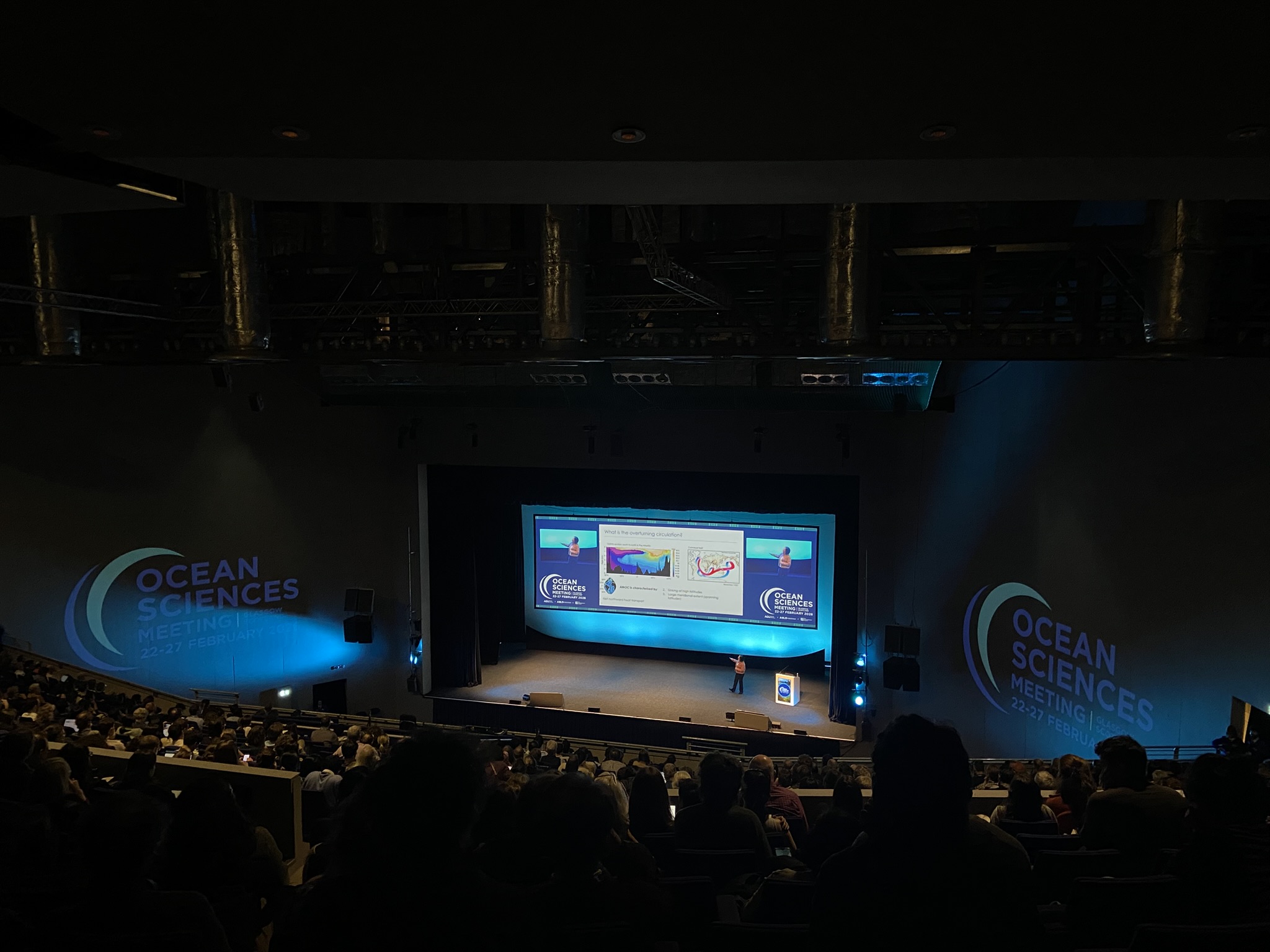
One of the highlights of my PhD so far has been attending the Ocean Sciences Meeting 2026 (OSM26) in Glasgow. The meeting brought together around 6000 researchers from around the world, working across physical, chemical, biological, and interdisciplinary ocean science. Through the support of the Challenger Society for Marine Science I was able to attend, giving me an excellent opportunity to share my PhD research at a major international conference and engage with current developments across ocean sciences.
I presented new findings from my PhD research, “Life on Plastic: Microbial Colonisation and Degradation of Microplastics in Viet Nam”. This is one of the first long-term, in-situ studies of its kind in a tropical marine setting, providing a better understanding of microbial colonisation of plastic through time. We found microbes on microplastics might pose risks to seafood and human health, and that plastics are enriched with putative plastic-degrading bacteria. This long-term dataset is helping us to build a clearer picture of how microbes colonise and transform plastics through time in tropical waters. Presenting in person generated useful discussion and feedback, and was a really valuable opportunity to connect with other researchers working on microplastics and microbial ecology.

Beyond presenting my own work, it was great to spend the week in sessions spanning a wide range of oceanographic research: from “making the invisible visible” and communicating deep‑sea science, to eDNA and ’omics advances, marine carbon dioxide removal, offshore renewables, marine plastics, and beyond. What stood out most was the breadth and depth of the ocean science research happening across the community, and how different disciplines are approaching shared challenges. It was particularly interesting to see how transdisciplinary the field is becoming, with molecular, ecological, and biogeochemical approaches becoming increasingly integrated, and a strong emphasis on collaboration and shared data.

With seventeen oral sessions running in parallel, the meeting also used innovative solutions such as colour‑coded headphones to allow multiple talks to run in the same space, resulting in a surprisingly effective “scientific silent disco”! The Scottish Event Campus was a great venue, with large spaces for talks, posters and networking. The scale of the conference was especially clear in the poster hall, with well over a thousand posters presented.

Overall, OSM26 was a valuable opportunity to present my work, explore a wide range of research areas and build connections across the ocean sciences community. I am grateful to the Challenger Society for Marine Science for supporting my attendance through a student travel grant.
Awardee Profile:
Jennifer Scott is a PhD Researcher at Heriot-Watt University, Edinburgh. Her research focuses on how microbes colonise and break down microplastics in real marine environments, from Vietnamese aquaculture sites to the sub arctic North Atlantic. Through field campaigns in Viet Nam and offshore work in the Faroe–Shetland Channel, she combines in-situ plastic incubations with microbial community sequencing, imaging, and DNA stable isotope probing to assess plastic biodegradation and identify pathogen and antimicrobial resistance risks on plastics. Her work links field ecology and oceanography with advanced molecular tools to reveal how plastics interact with microbes once they enter the ocean.
Leave a Reply